POINT OF EXCHANGE
2022
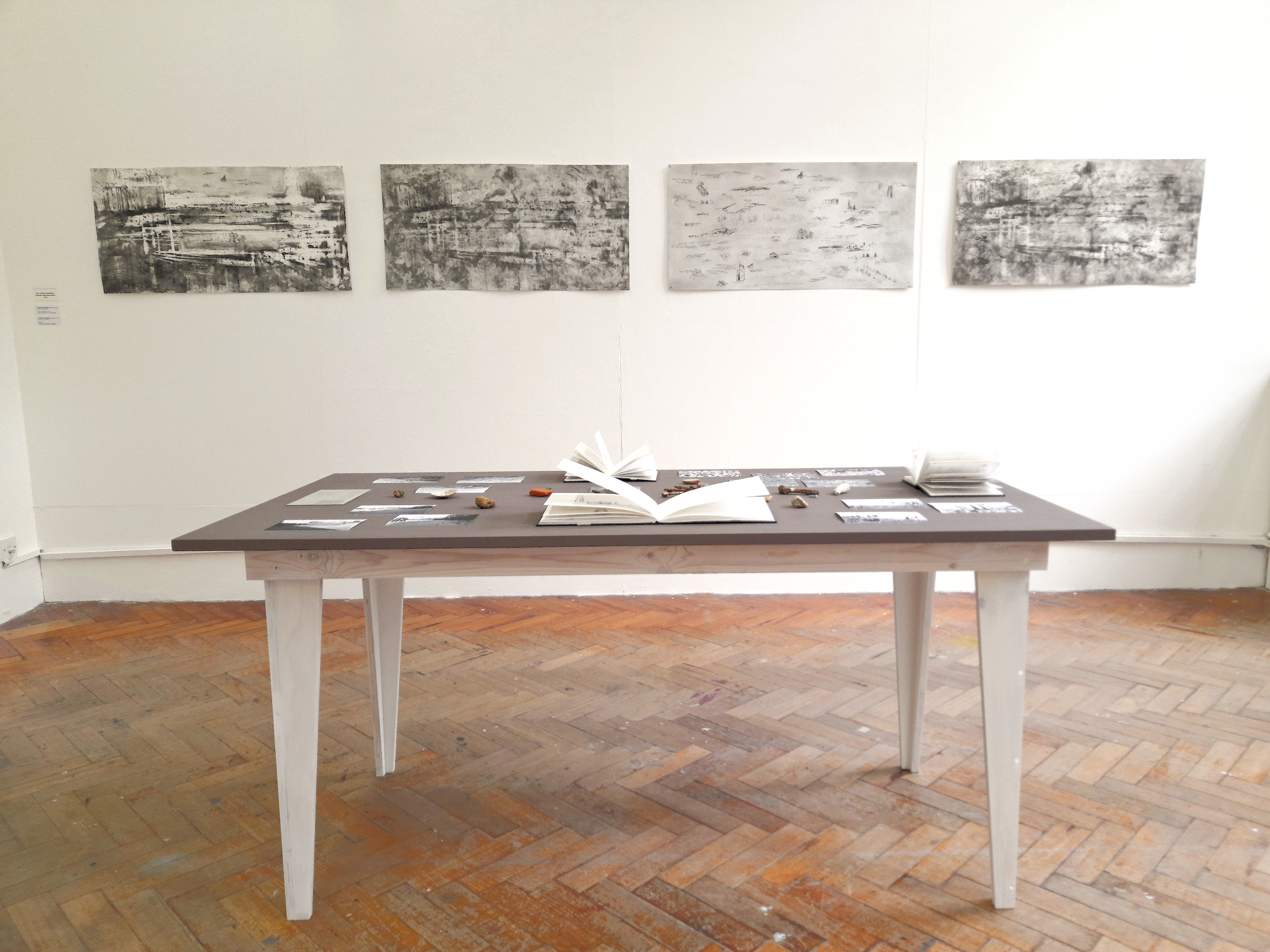
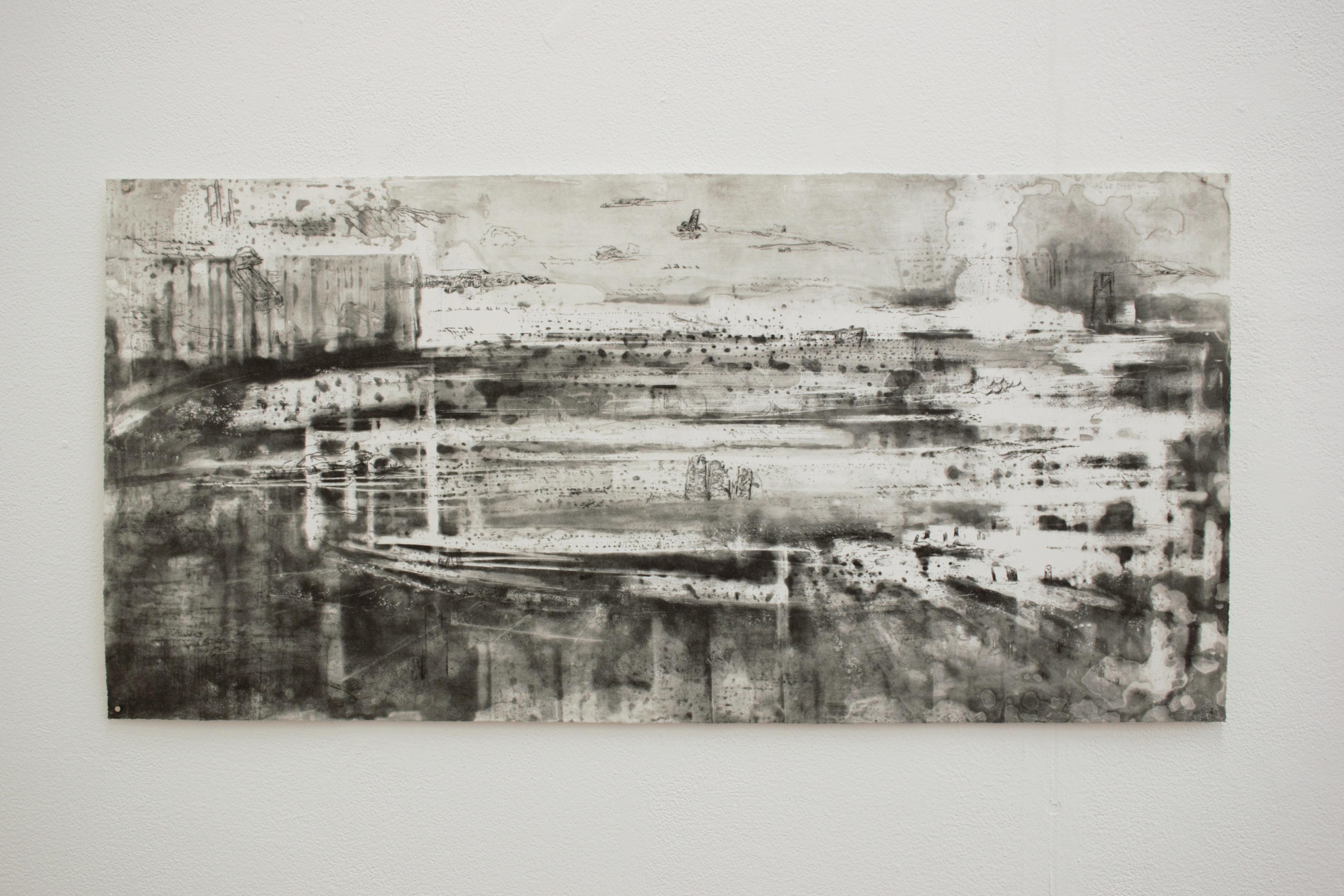
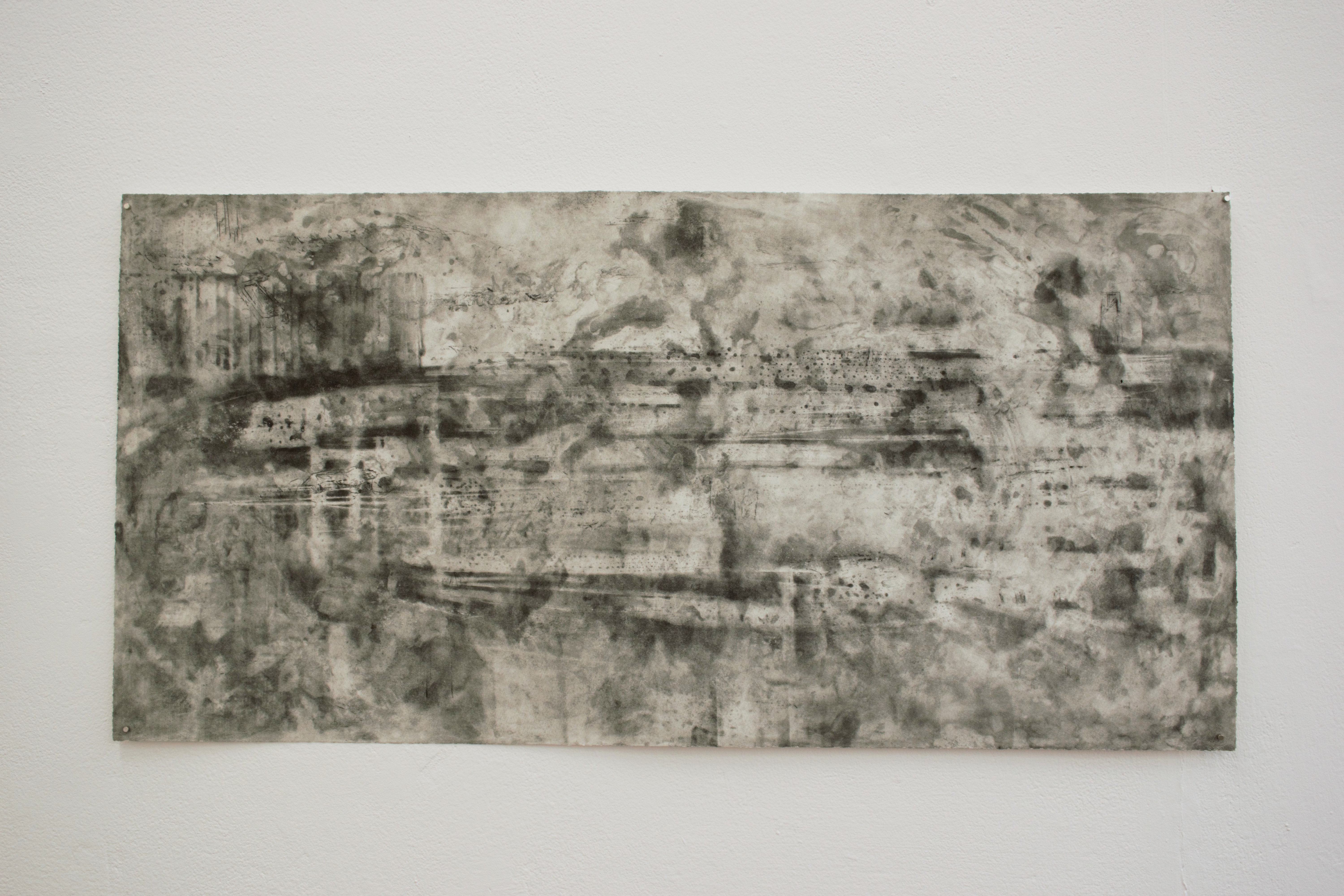
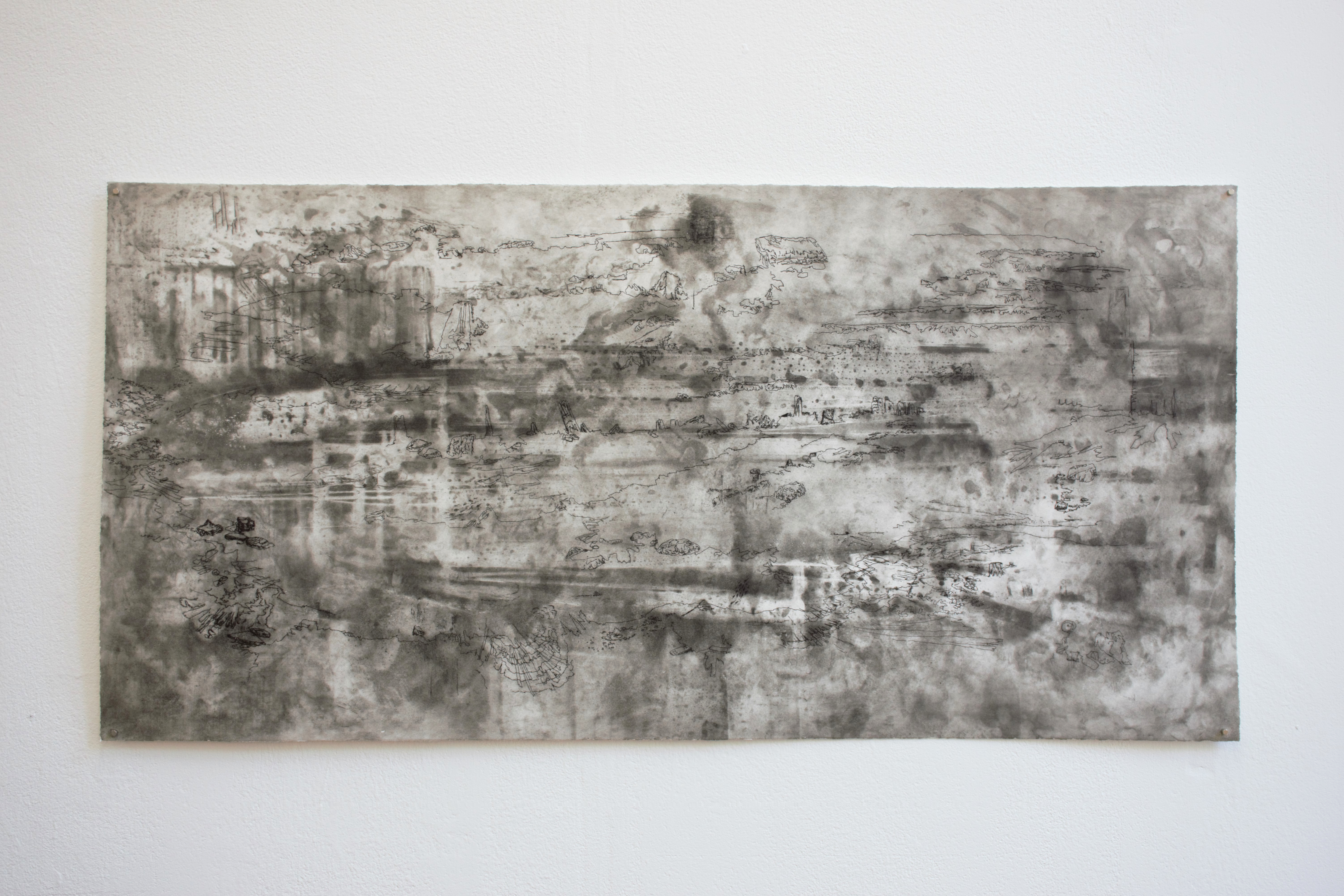
The Point of Exchange series looks at land through a direct engagement that uses processes to guide my eye and body through place and into conversation with the land. Using drawing as an apparatus to see and engage, I begin to open a dialogue between this space and myself. Site specific, this work looks at the estuarine banks of the Thames through London, from Bermondsey to Thamesmead and its own actions of tidal retrieval and submergence that act to embed the histories of this place within it. These sites were unvalued pieces of non profitable land, and when you looked for them on a map you would find at most a shaded bar to outline their rough shape. Sitting in stark juxtaposition to the surrounding landscape of London where every square foot is plotted and assessed for profitable potential, these sites marked the point where the tidal waters of the Thames prevented further occupation of land.
During this project I became very interested in the multifaceted links with my process, journeys through place, the Land, its actions, concepts of memory and how our knowledge of place becomes intertwined with the history in memory brought from both myself and the site I inhabited. Looking into research and philosophy around memory and landscape, including Debord’s notion of the dérive, I began to develop the idea that this research as mediated by a processes of drawing in an extended sense that includes walking as a means of drawing with your body, is an enabler for a heightened level of attention that reacts against traditional visual means of plotting landscape to reveal a sensitive exchange of information. I was mapping in a very different sense, it was messy and sporadic including notes on myself how the land felt and the changes in environment as well as sketches that would not enable navigation of the site, but navigate an understanding of its uniqueness, the essence of this place and existing among it. This notion is not new however as this type of ‘drawing’ would have been used by anyone who walked this land regularly, testing the shingle with your toe to sense movement, feeling your feet depress in the muddy silt, moving as a pencil would to delineate the contours of the land. It is the act of drawing place through movement. The idea of a ‘Memoric Geography’, later the title of a short presentation I gave as part of a research exchange, became this notion of an exchange of memory and how through process there is a revealing and exchange of information between artist and subject.
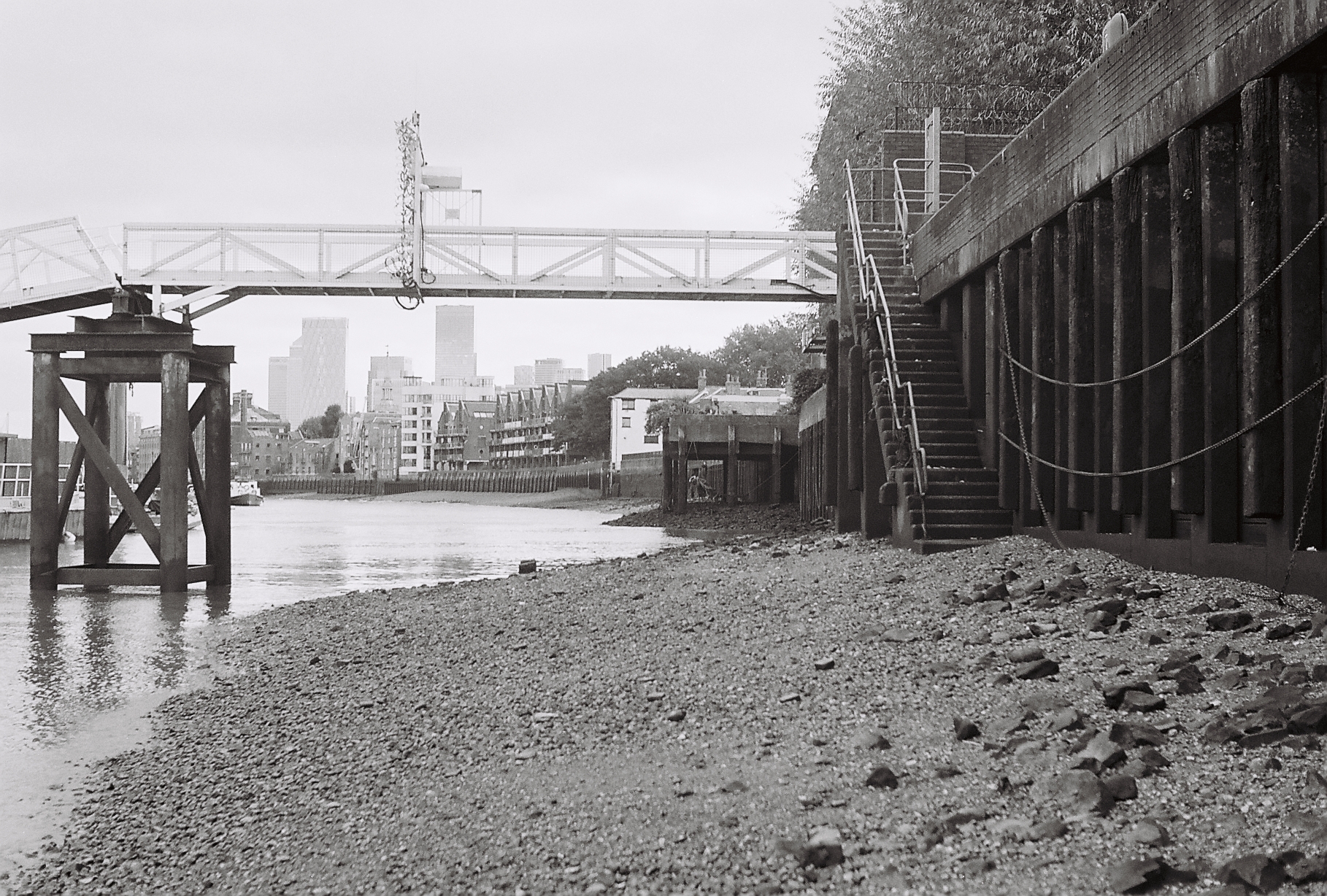
Left: 35mm Photograph taken during initial research of the site in october of 2021. Looking from Bermondsey beach towards Rotherhithe.
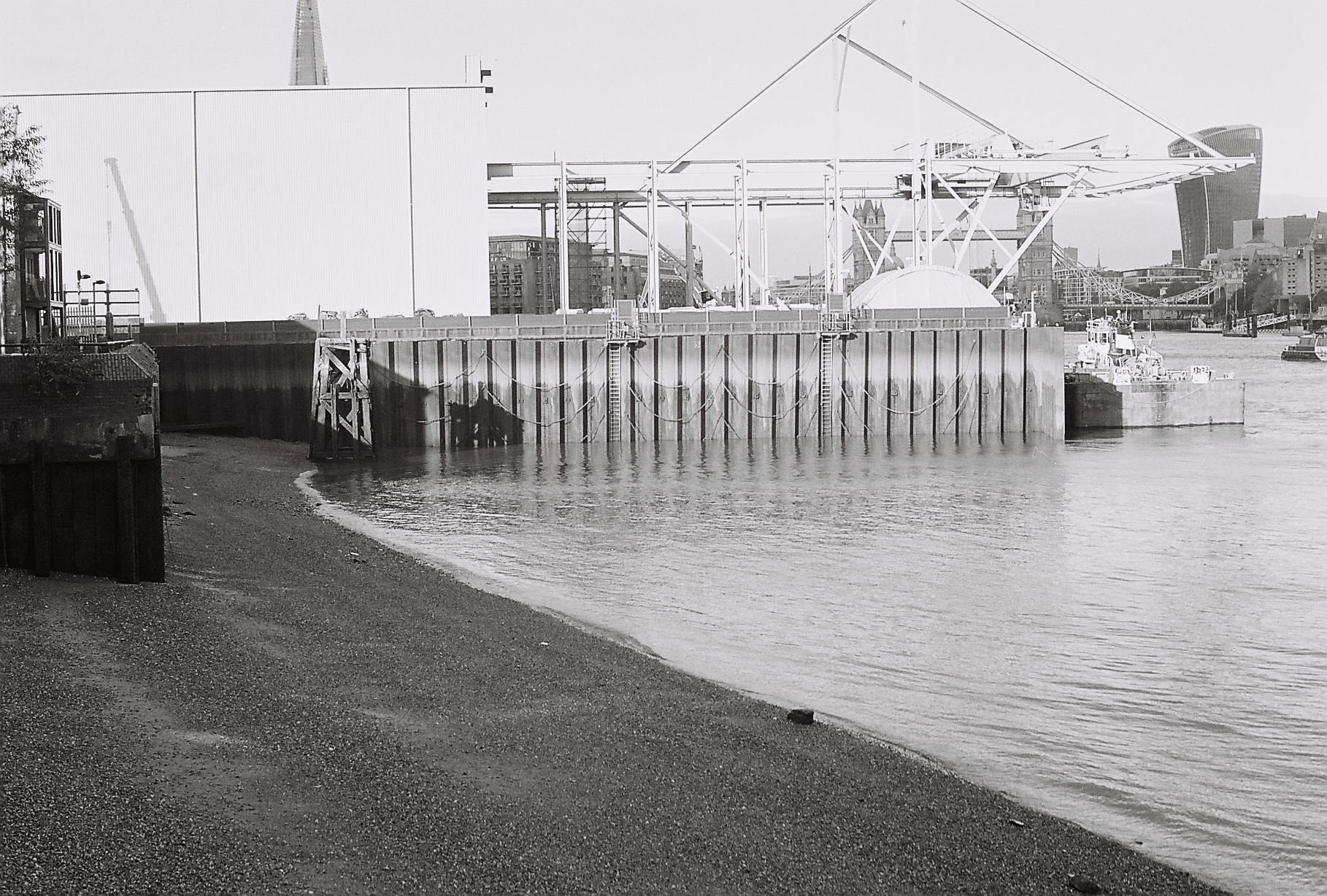
Right: 35mm Photograph taken during initial research of the site in october of 2021. Looking down from the Thamespath bank onto Bermondsey beach towards Tower Bridge.
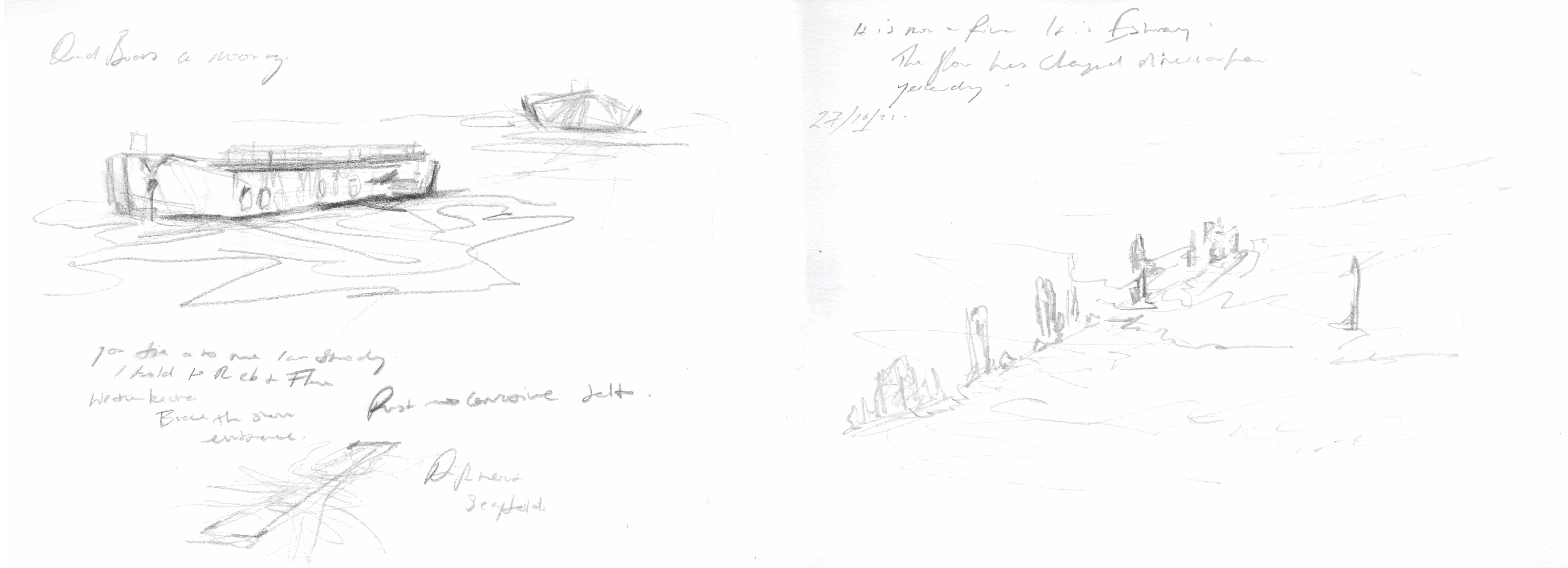
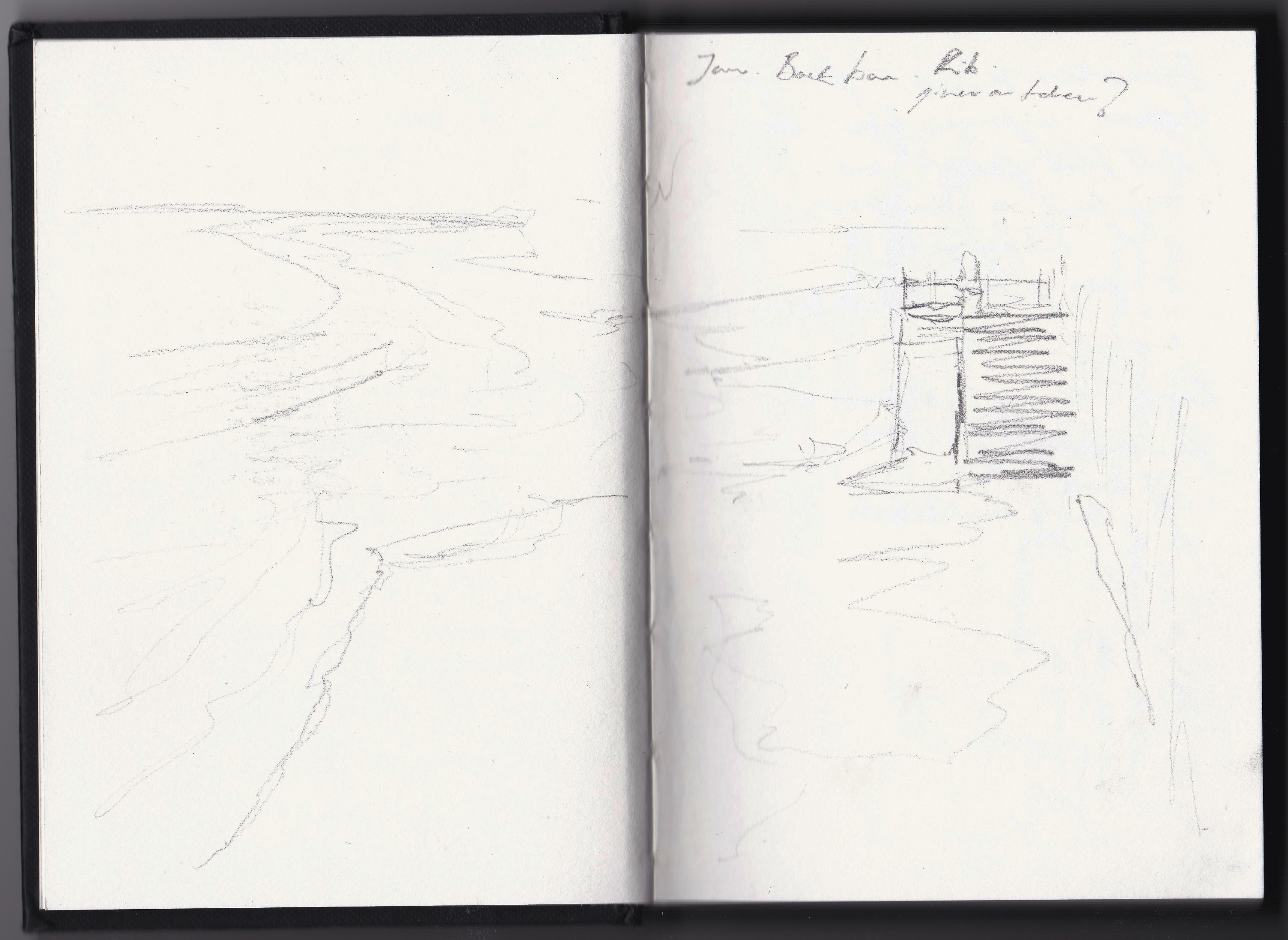
Left: Scan of one of the Sketchbooks used for the preliminary reserach in October-December 2021. Between Dock Head and Rotherhithe.
Right: Scan of my pocket sketchbook made on a journey along the Thamespath at Greenwich. Notes detailing bones found on the banks.
The plate was formed over the course of about six months, four of which was spent making with the plate onsite. There was a ritual to taking this plate out on site with me in between the high and low tide points, sometimes twice a day when timings meant there were two low tides in daylight hours, and my the rhythm of my research set with the nature of this site.
The directness of this plate in place of a sketchbook meant that the work felt a part of this journey with a more immediate response that was a mediator in this discussion. I was introduced to the idea of drawing being an ‘apparatus’ of seeing a few years ago by an artist and academic Jack Southern, where by the act of seeing is focussed by the use of drawing. Because of the way we study more intently when drawing, we see and observe in a different way, our engagement is heightened and our awareness of our subject is greater therefore we see more acutely.
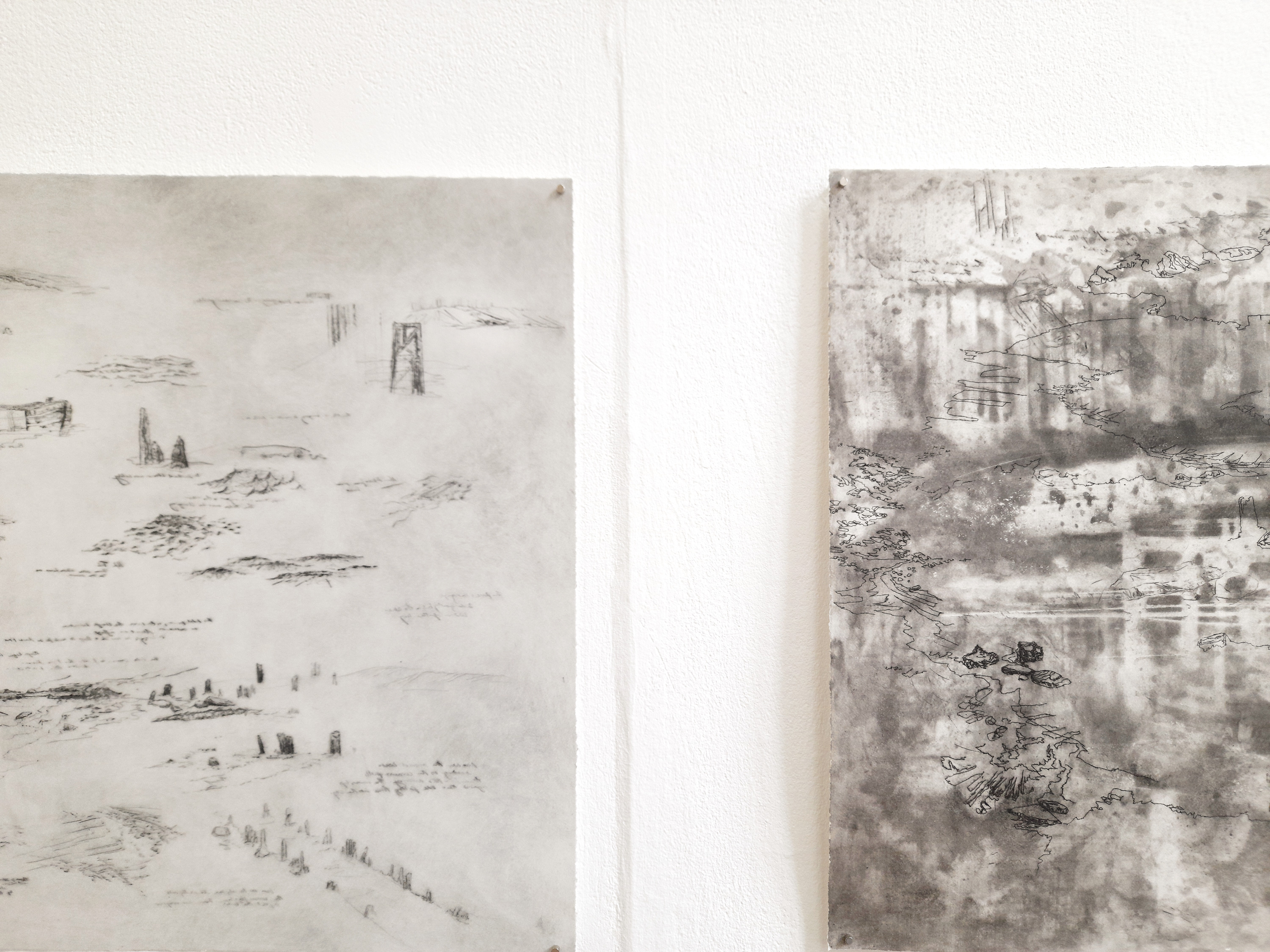
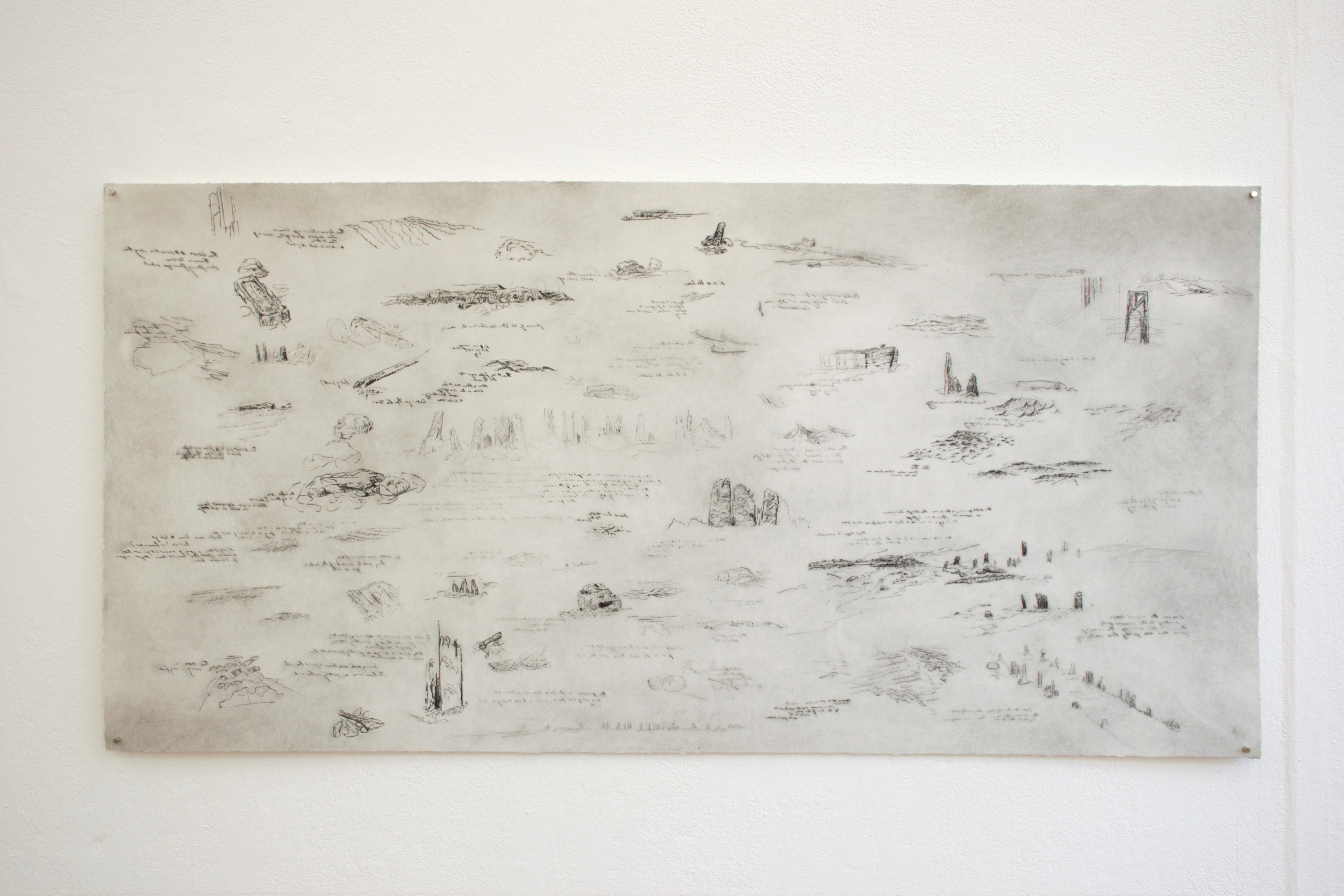
I used Drypoint intaglio methods to embed my drawings into the plate, recording all of the information of my visits, including where these journeys extended to through found objects that were retrieved by the tide, and people and places brought to mind from my own memory.
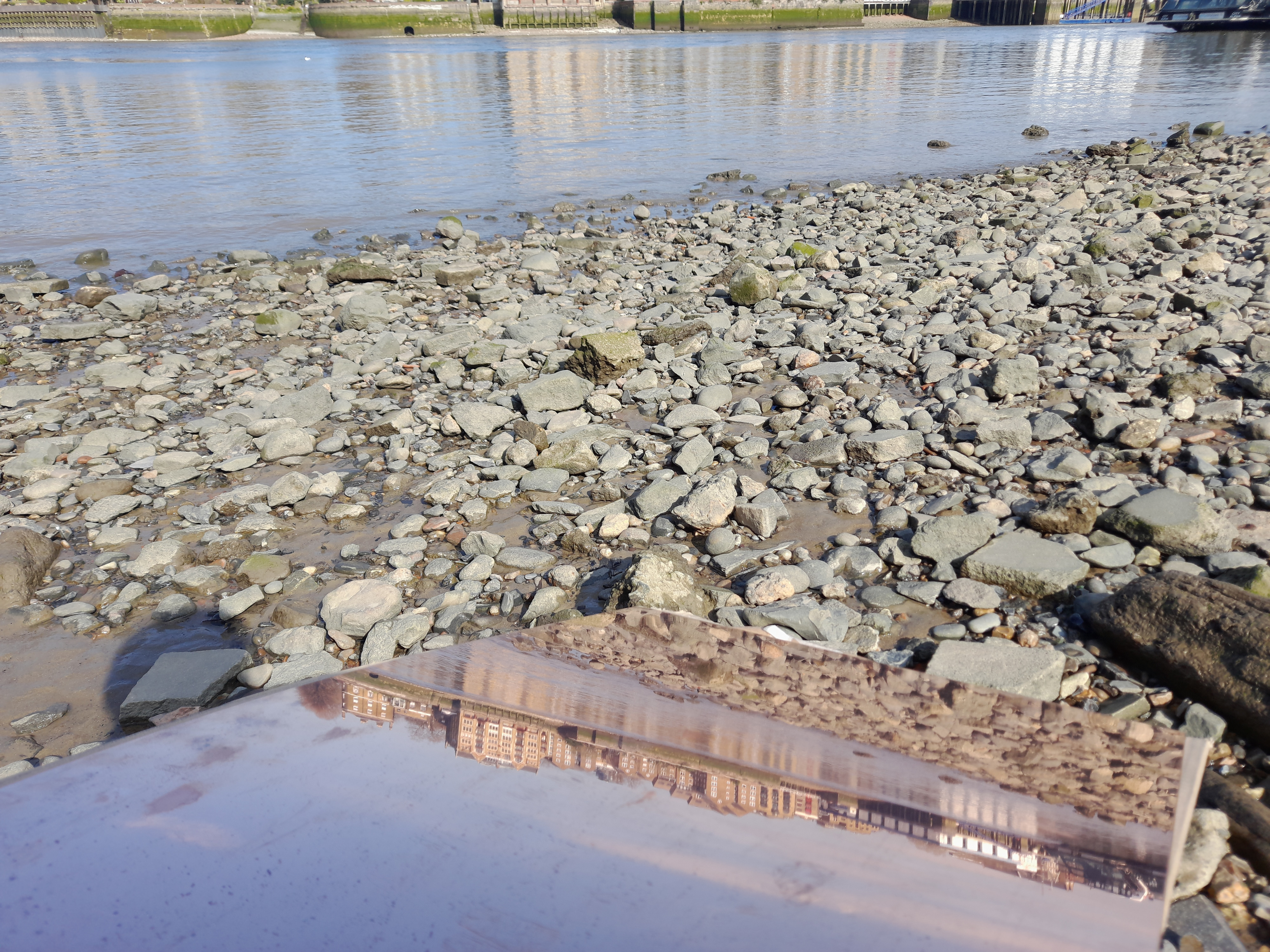
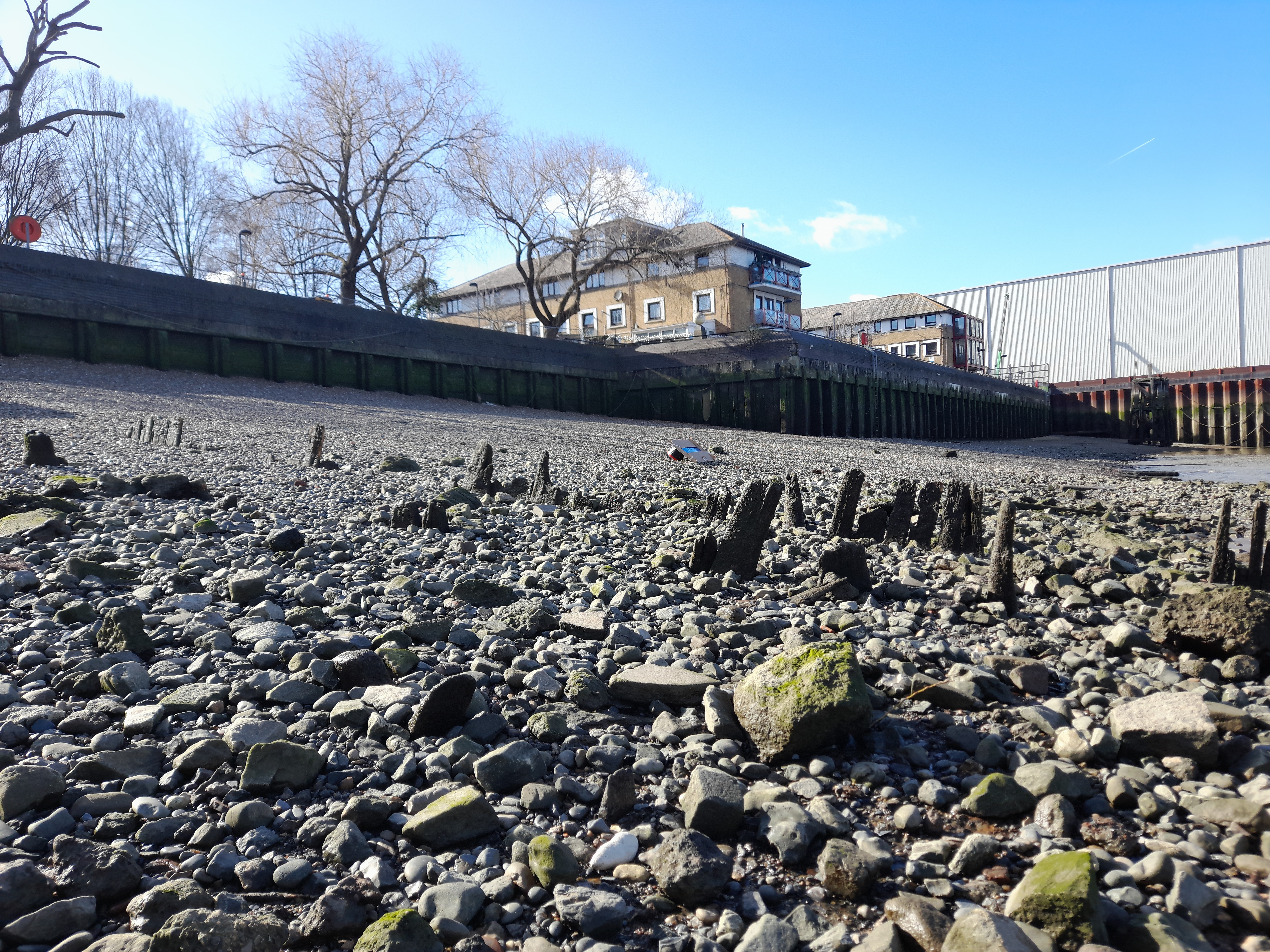
Left: Photograph of the Plate onsite in April 2022, balanced on my knee whilst drawing with many visible sketches on its surface.
Right: Photograph of my plate in the centre of Bermondsey beach during a walking break whilst researching onsite in February 2022. Showing the remains of the jetty from the times when this stretch of the river was used as a port of goods.
After the development onsite this work was bought back into the studio to go through reflective periods of change. The Drypoint slowly faded after taking a short run of prints, leaving its Ghost in the background of the image. Several stages embedded more visuals of the site itself, line drawings taken during further onsite research, and in between stages where I used the acid to push and strip away parts of the plates information. This process revealed and submereged elements of my research much in the same way the tides action submerges and reveals, altering what is seen and apparent about this body of research.
The similarities between Land as Archive, Memory as Archive and the nature of making an intaglio plate is something I have feel important to the making process as the way you can write and rewrite a matrix through corrosive and abrasive methods, relates directly to the research established in my practice that discusses how Land can encapsulate time within it, particularly that of tidal and estuarine land. The layers of silt that are deposited cover and embed information about this place, people, and events in its past. In the same way the action of the water’s current can act to randomly uncover and bring bits of embedded information to the surface, information from my own personal memory archive are retrieved and embedded in this journey, embedded in my plotting of this site.
The series of works in their surrent state were shown as a part of a group show, Brick Walls + Glass Ceilings in Camberwell in July 2022, installed alongside a vitrine of research (as seen below) containing found objects, sketchbooks photographs and sound recordings.
They were also shown as just the first and fourth of the series as part fo the Clifford Change Postgraduate Print in London 2022, and were awarded that years Purchase Prize by Stephen Coppel, Assistant Keeper and Head of Contemporary and Modern Prints at the British Museum. These two works will be held in the Clifford Chance Permenant collection as of February 2023.
The Point of Exchange series installed at Brick walls + Glass Ceilings 2022, alongside a vitrine of research containing found objects, sketchbooks, sound recordings and photographs.
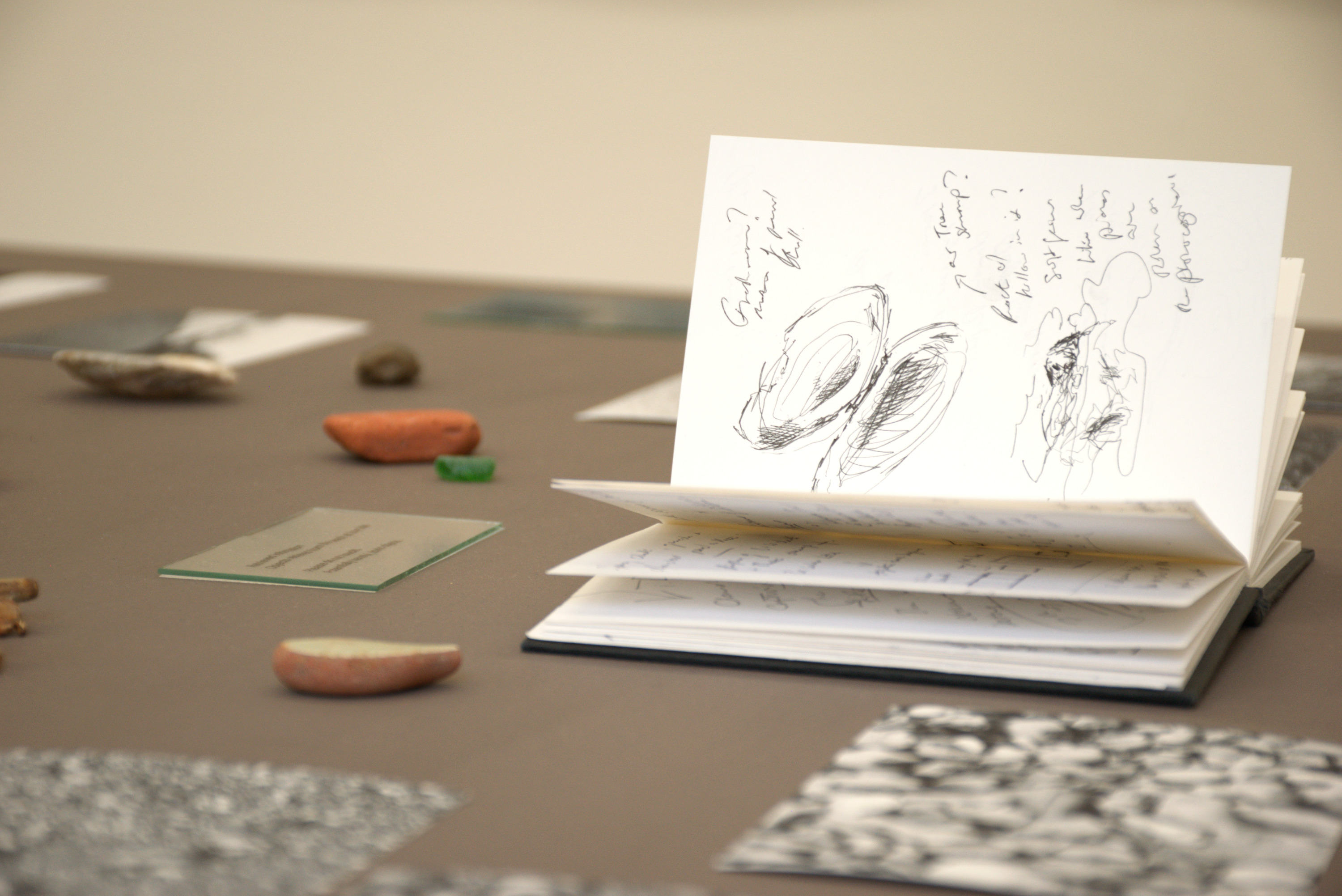
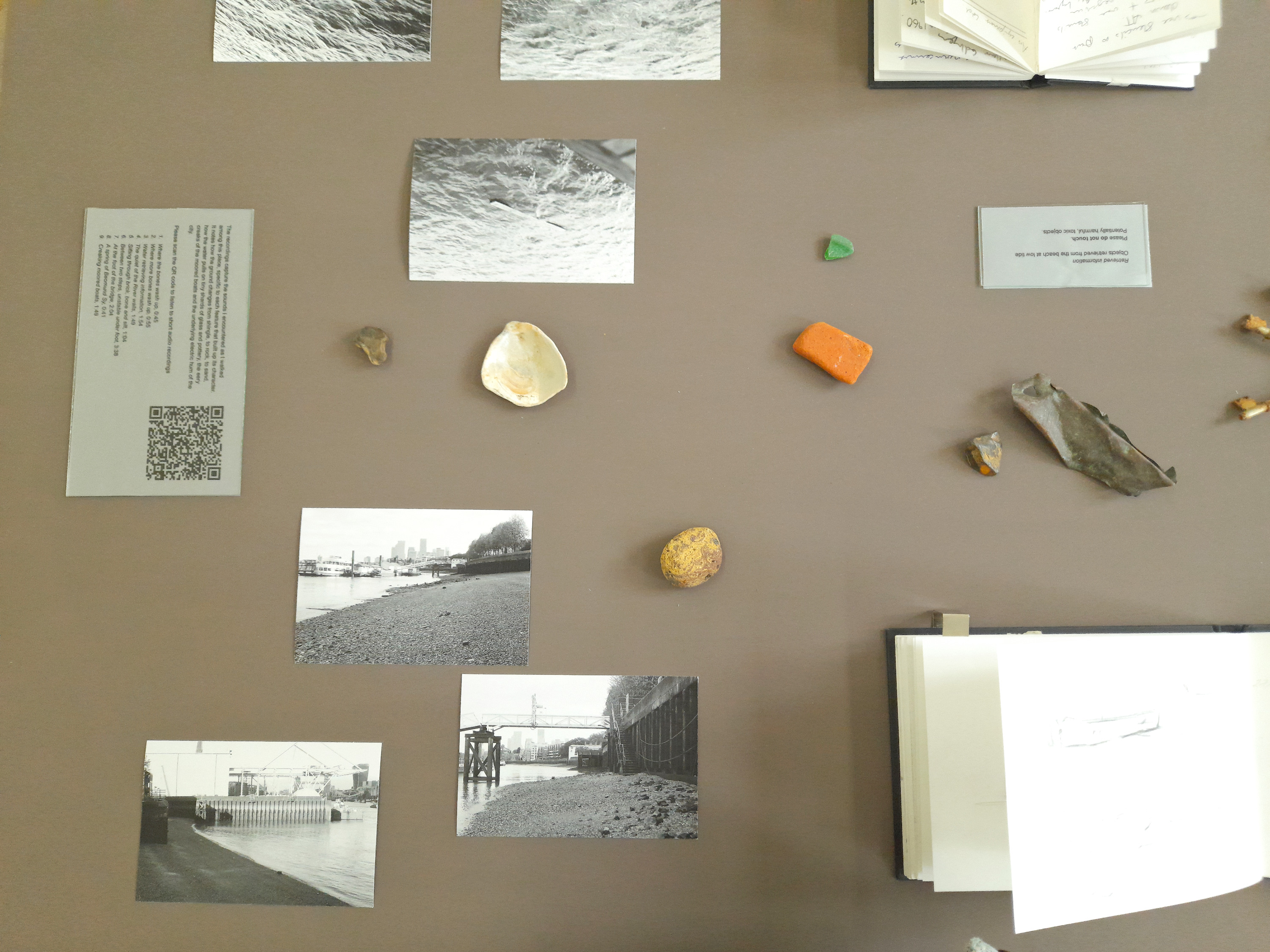
Left: Detail of reserach vitrine showing found objects washed ashore, photographs and an open Sketchbook.
Right: Photograph of the research vitrine from above, showing contents.
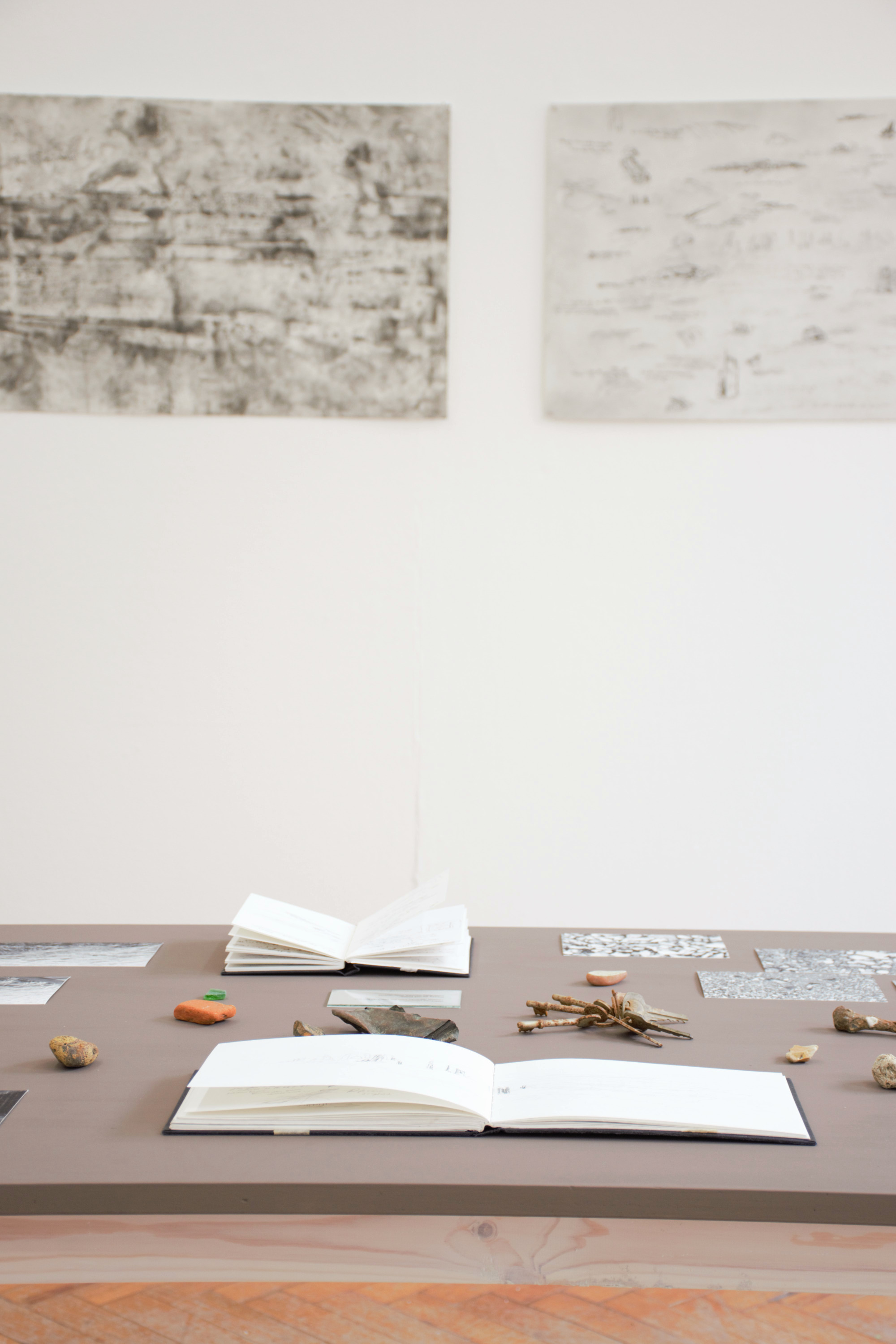
Left: Vitrine of research with Installed prints behind.
Right: Details of the Point of Exchange series number I and IV, as displayed next to eachother in Brick Walls + Glass Ceilings 2022.
Previous Project
RectangleNext Project
Arrow%20Head%20 Rectangle EVANGELINE MORRIS