FLUID SETTLEMENT
JUL 2022
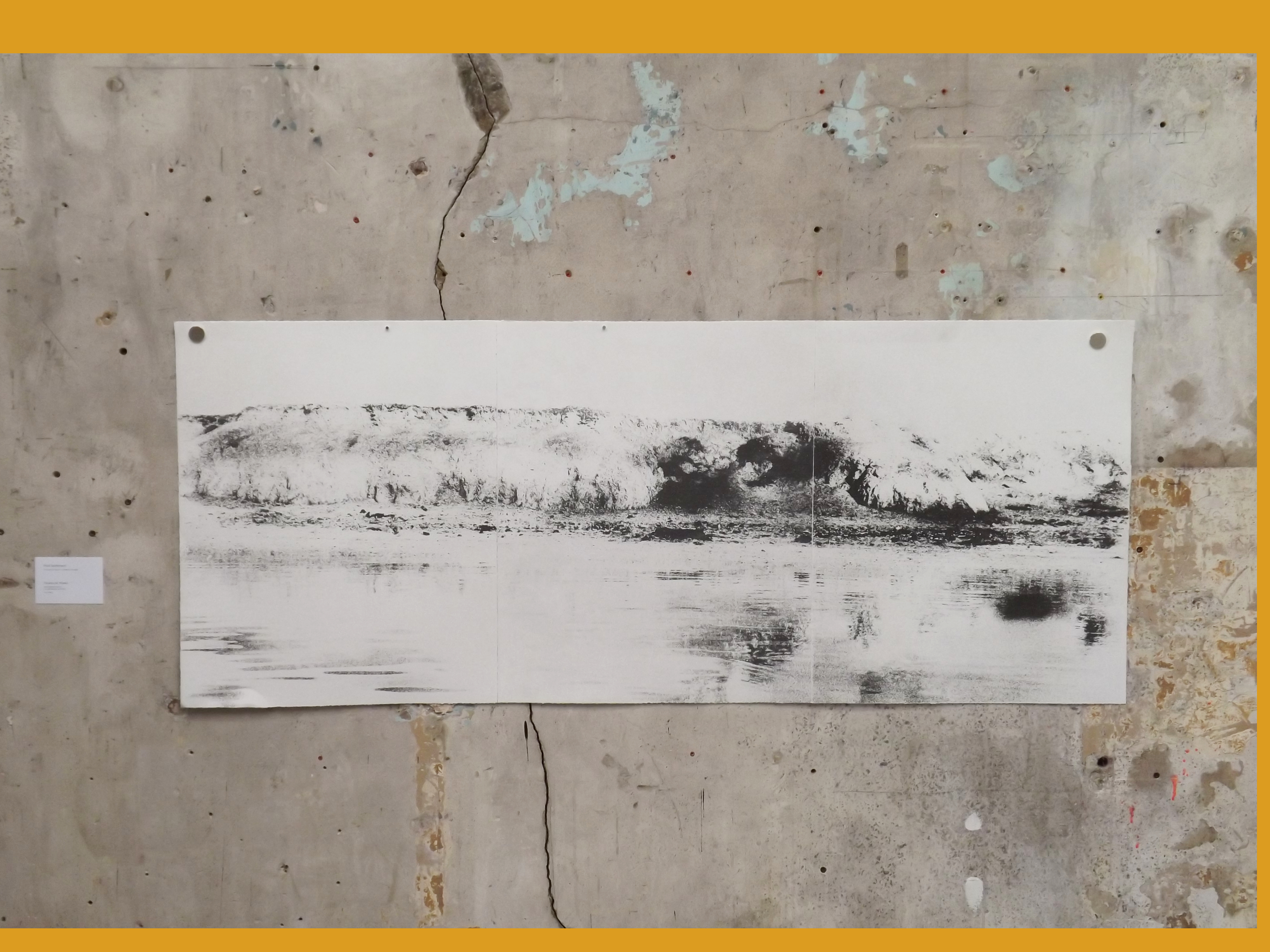
This project stemmed from the Point of Exchange research, but took the project upstream to a new site to continue the research. This section of the river was very different, but I had started to research here at the very beginning of Point of Exchange, and so bringing the research back here felt appropriate and like it could offer new interest to the project. Here there were parallels between the theory behind the sites archival nature, although in different ways.
The site I was now walking, from Wolvercote to the boarder of the city at Oxford, is a large part of flood plain and so is regularly submerged by water which adds new layers to embed information. Unlike the tidal nature there is less uncovering of submerged material on the banks of the river, however the erosion unveils this history in the striation of the earth and that which is trapped including seems of iron rich earth and layers of shells and clays. The Thames waters also pull object of information down through the waters, and as the water is shallow enough to wade through, this became an important element of my practice.
I became interested in the presence of earth colours as a marker and record of time and, after hearing a talk by Eliptha Tsoutsounakis, a being a form of ‘time based medium’ made up decomposed matter from geological and anthropacene history.
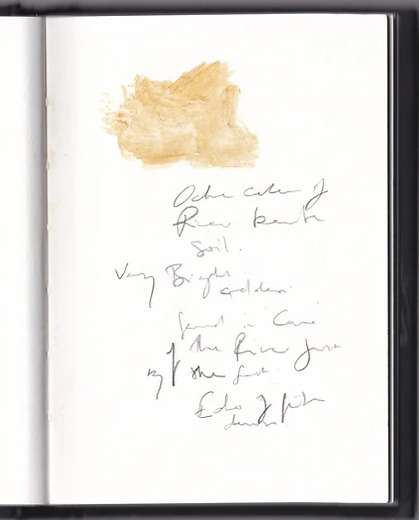
Over the summer months I began to walk this site and gather research through photography, note making and drawing as I had when I was researching London waters. Again I found this process of drawing, including the walking, extended the knowing of this place, and offered up an opening of dialogue and interaction with site. I would use materials from the site including river water and raw earth pigments to carry out these drawings, capturing the exact colours of this site.
I visited the site several times from August to October, each time wading through the water, feeling my feet embed within the soft clay and silt of the river bed, and searching through the shallow waters for objects and artefacts of this section of rivers profile. This sense of touch guiding the research became important as it was another aspect of dialogue being opened up between myself and the site, this instinctive sense of movement from testing the ground with your feet adds another element of understanding about the land, and forms part of this extended drawing practice.
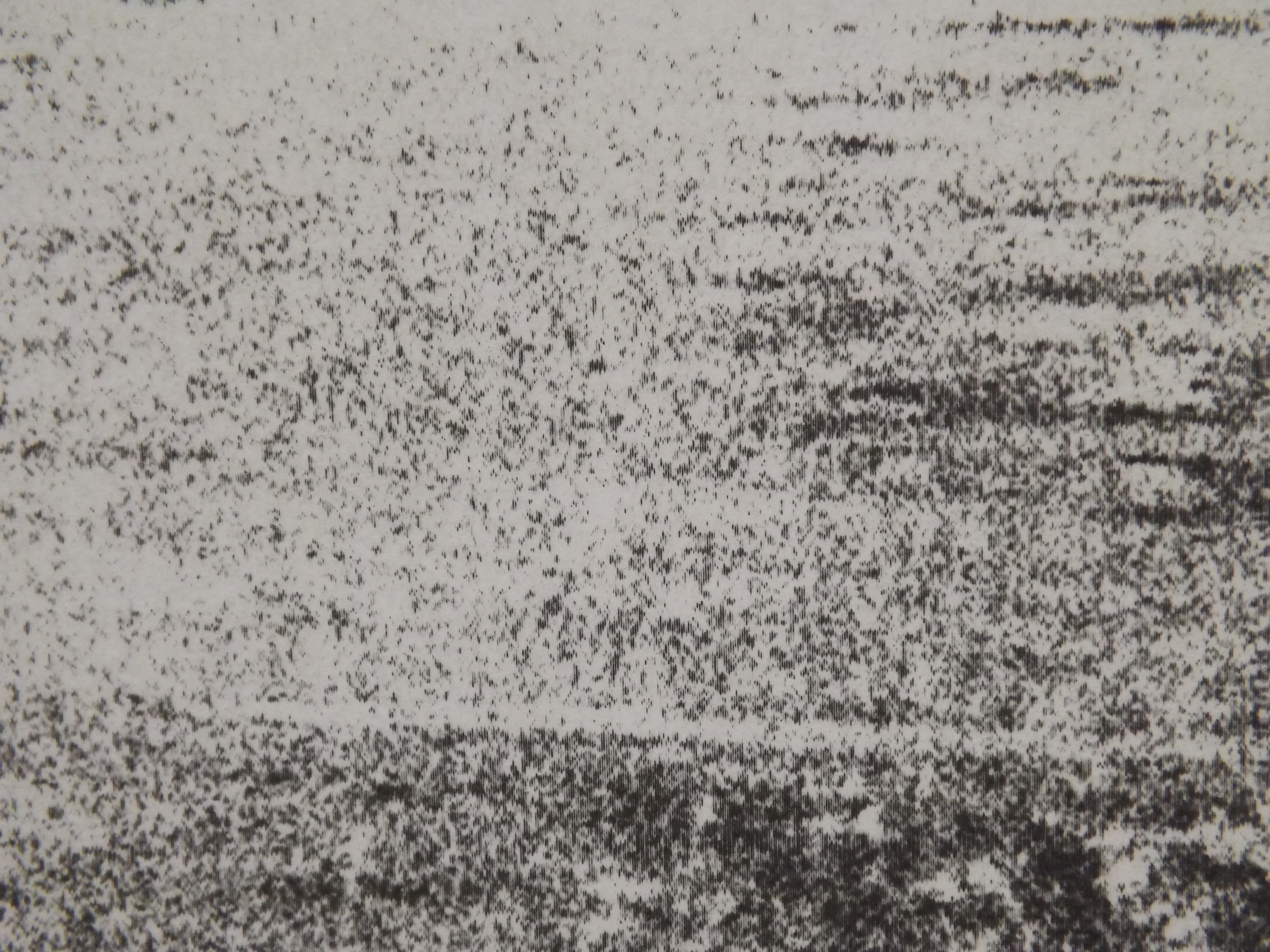
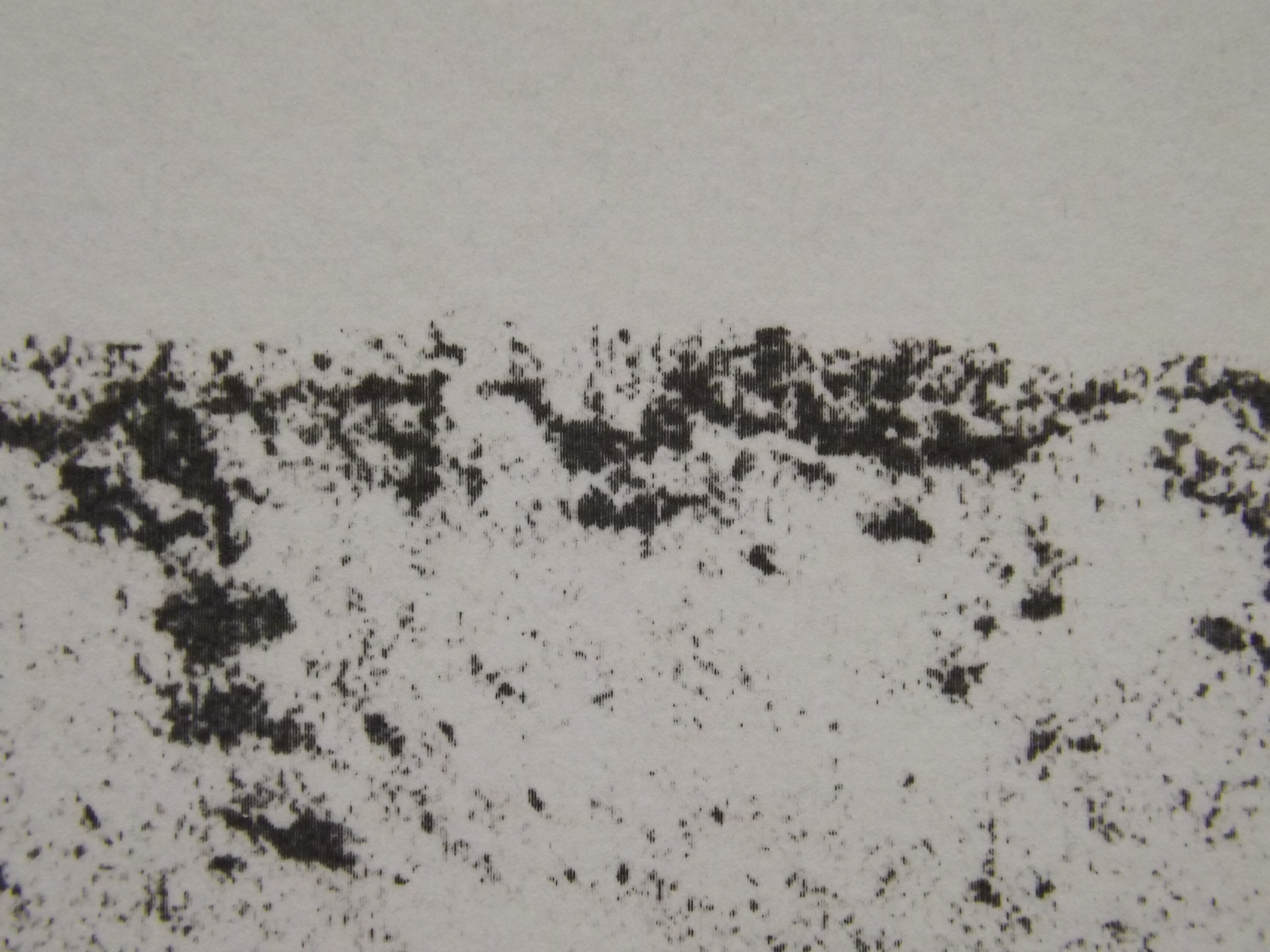
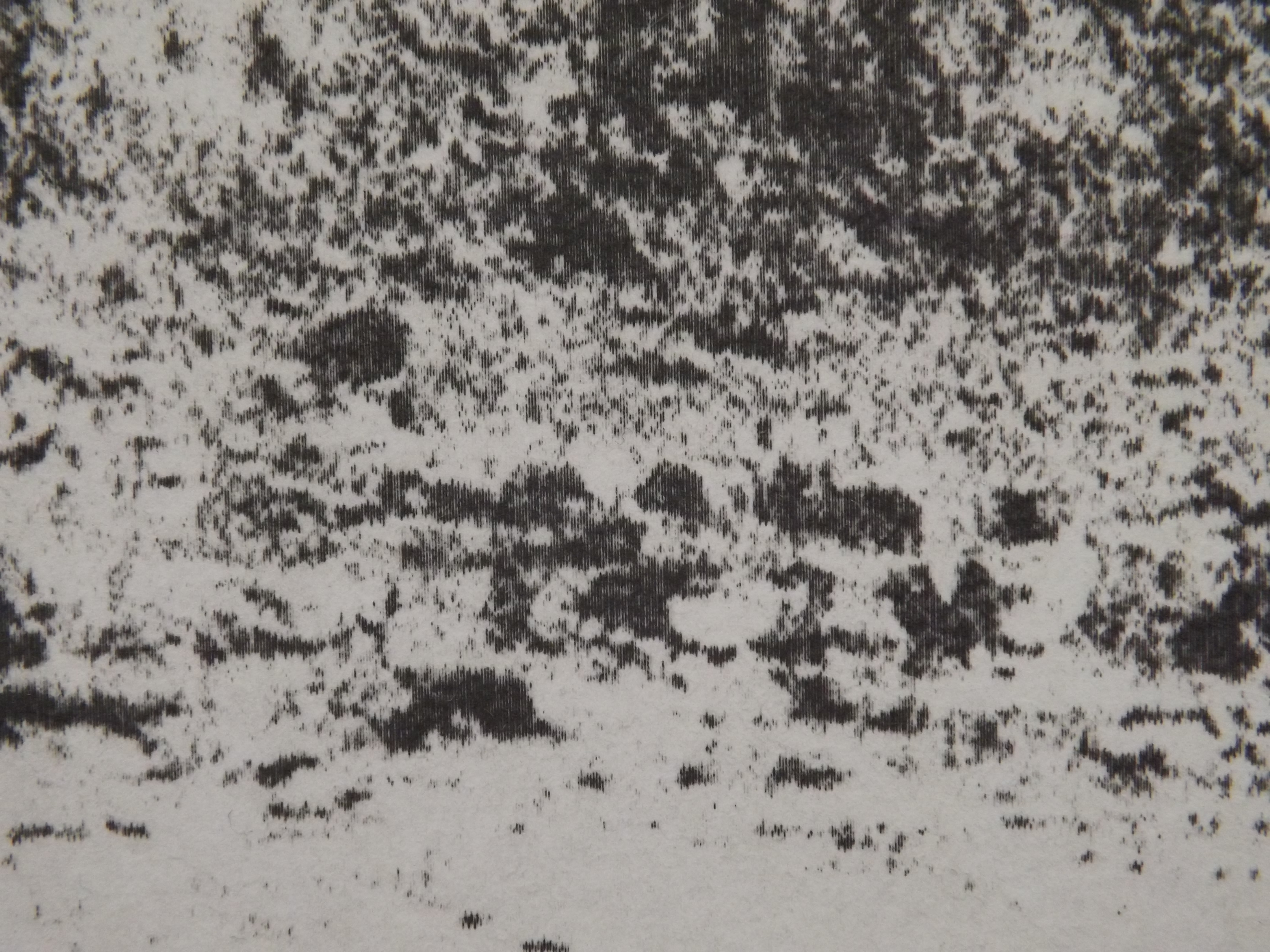
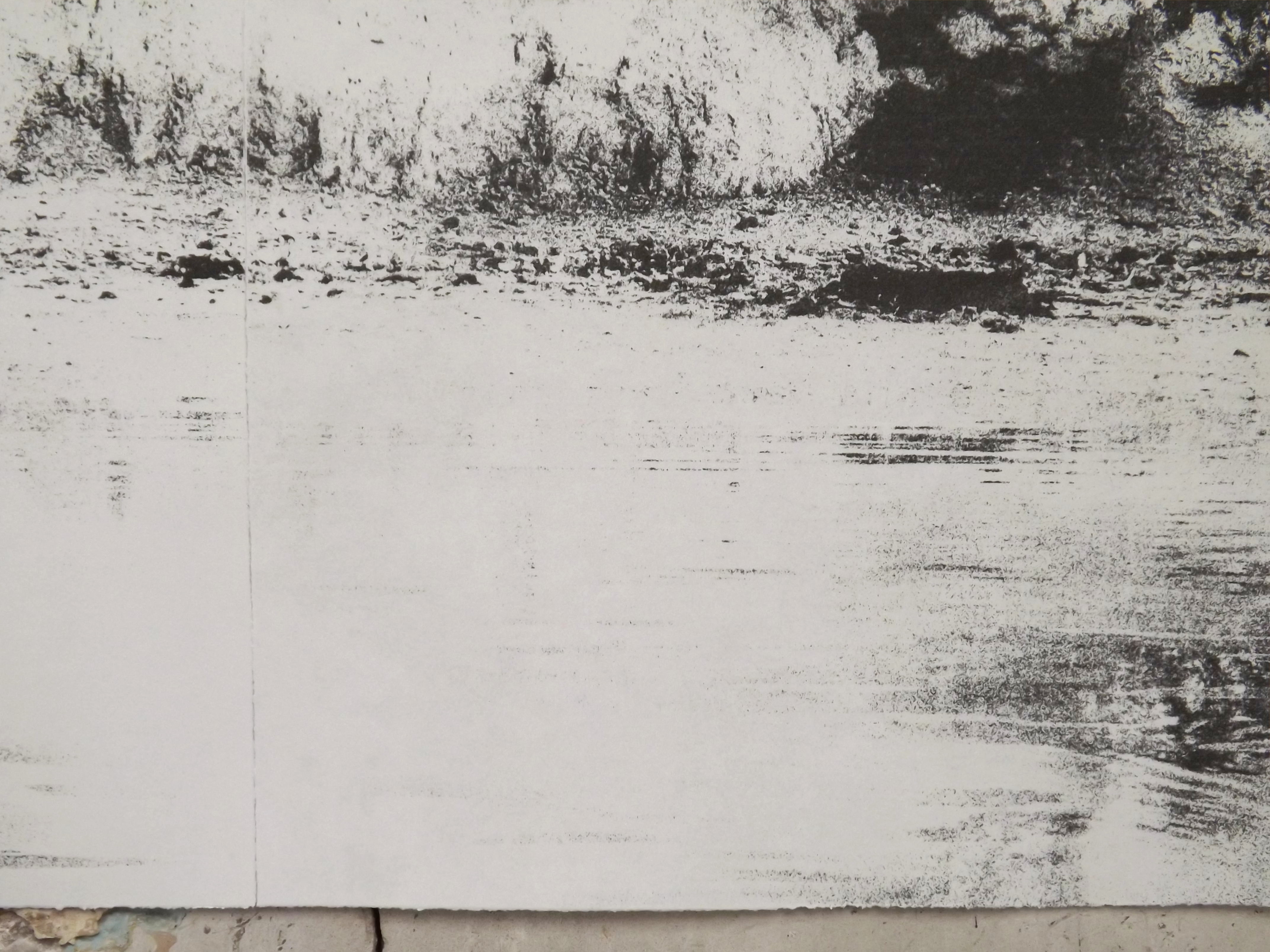
I decided to use digital photography for this research as I had the opportunity to develop a new method of plate making with the use of a laser cutter at Camberwell college of arts. As a result I developed a process of laser etching collagraph boards to incorporate photographic elements into the my plate making process. This was an interesting shift that felt accelerated this making stage but still was rooted in that same principle of embedded information, and creating an artefact with memory.
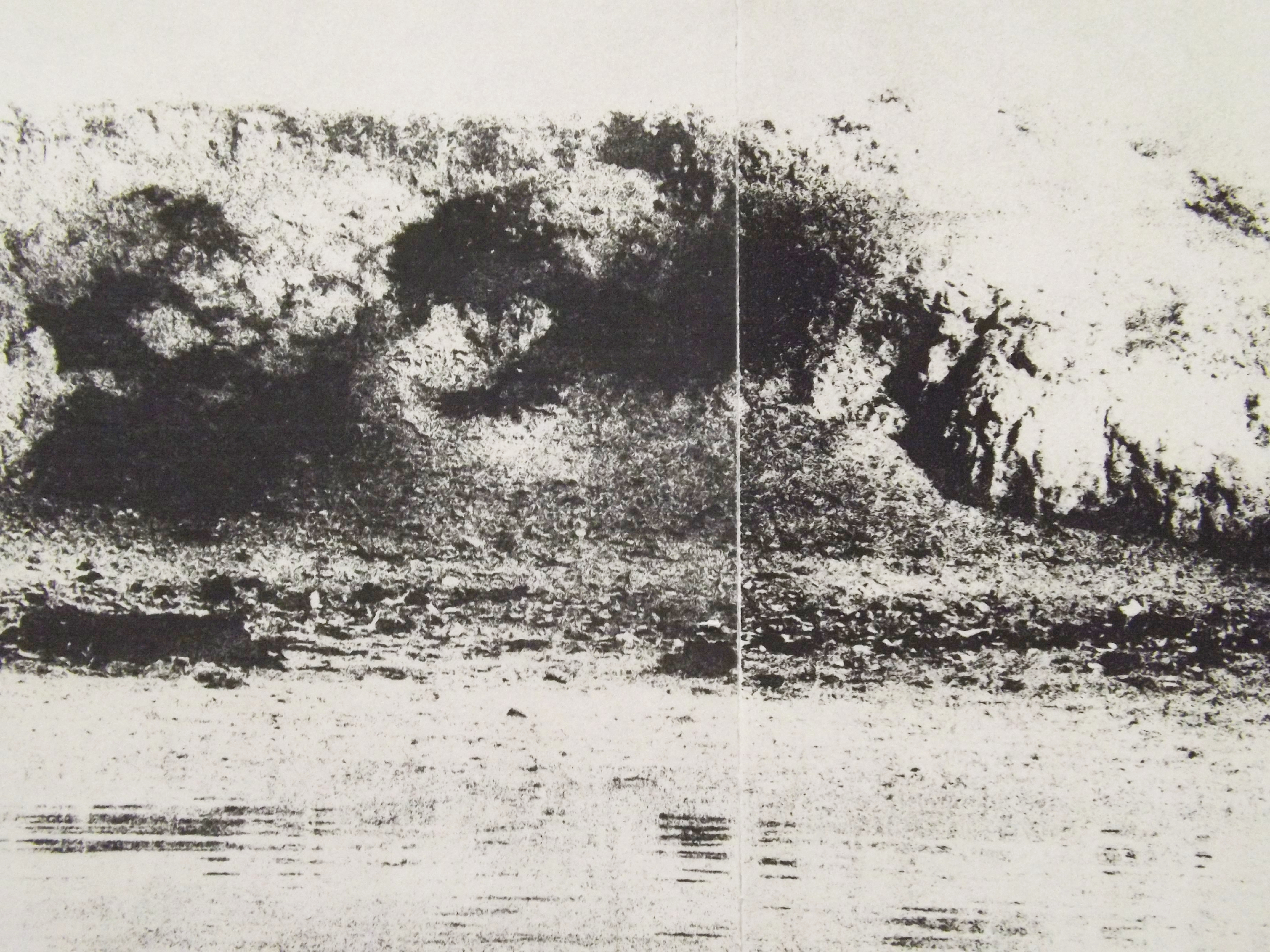
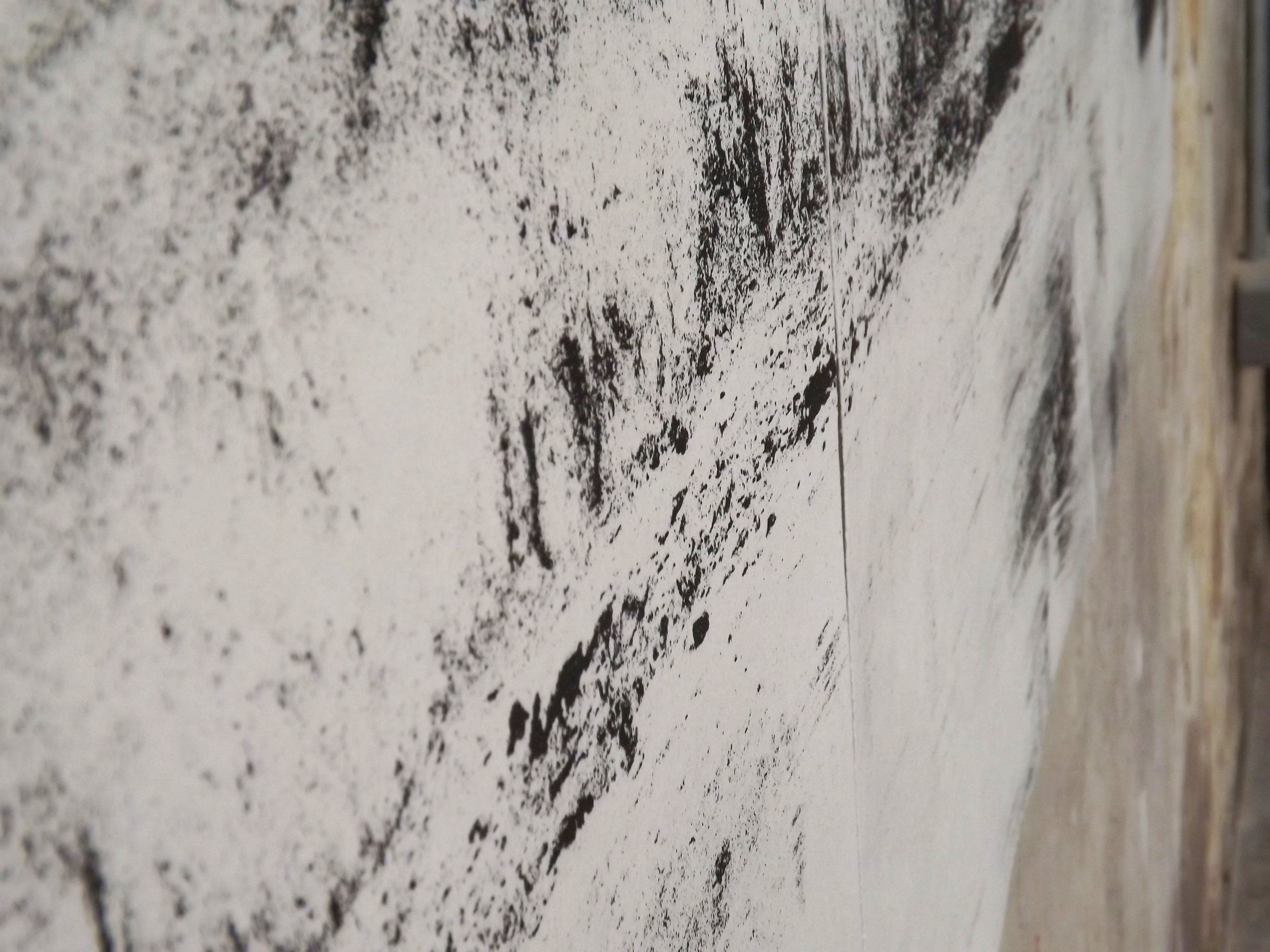
Beggining in digital collage, these plates pushed the photographic element, and as within the etching process, when translated through the laser cutter the images became something other through process, extending the making beyond my own hand. The same act of deterioration embedded information through the striated lines of the laser cutters process, echoing the striations through the earth on the flood plains.
This project was printed and shown at the Copeland Park Gallery as part of a split show between Dilston Gallery in Southwark park as part of Church/Factory 2022.
Photograph of Fluid Settlement installed as part of Church/Factory at Copeland Gallery November 2022.
Below: Details of the above
Previous Project
Rectangle Rectangle RectangleNext Project
Arrow%20Head%20 Rectangle EVANGELINE MORRIS